

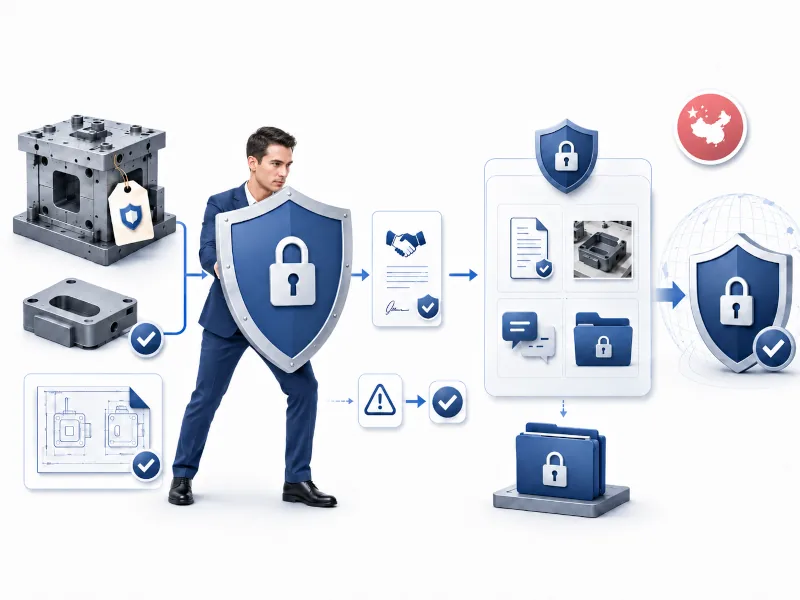
A tooling register shows which paid-for tools belong to you, where they are and their condition. An agreed change process requires the supplier to report changes in advance. You can then assess them before receiving the goods.
Paid for does not mean under control
Companies pay for customer-owned tooling but rarely manage it. After a few years, its location, remaining tool life and use by a sub-supplier may be unclear. This becomes a problem when you change supplier, if not sooner.
- Is ownership recorded in writing, for example in the contract or invoice?
- Does the tool carry a unique number and an ownership mark?
- Where is it – at the supplier's plant or at a sub-supplier?
- How many shots has it already made, and when was it last serviced?
- May it be relocated only with your consent?
What a tooling register contains
A tooling register does not need to be elaborate. This information is enough for a dependable assignment:
| Field | Content | Why it matters |
|---|---|---|
| Tool number | Unique and attached to the tool | Assignment when relocating or changing supplier |
| Owner | Your company, evidenced by contract or invoice | Proof in a dispute |
| Location | Plant, hall, sub-supplier where applicable | Detect production outside the approved plant |
| Revision | Status of drawing and tool | Detect changes without approval |
| Shot count and maintenance | Current count and last service | Plan replacement in good time |
| Dated photos | Tool and marking | Evidence the condition |
Changes: the most common trigger of quality problems
The supplier switches to cheaper granulate, moves tooling to a sister plant or assigns coating to a new sub-supplier. It may see routine business; you may face a new source of defects. Agree that changes must be reported before the modified goods arrive. The change process covers these steps:
- The supplier reports the change in advance.
- You assess the change using evidence, such as samples and a measurement report.
- You decide on the approval.
- The supplier implements the approved change on the agreed cut-off date.
- You update registers and documents together to reflect the new status.
An illustrative example
A plastic part has run for two years without complaints. Colour and impact strength then vary between lots. The supplier bought granulate from a different trader without reporting it. An agreed change process would have required advance notice and assessment using samples. A document register would have shown the changed material certificate.
Illustrative example – not a client case.
What you can do right away
Five steps that create clarity without much effort:
- Request a tooling list with numbers and current photos.
- Have ownership of each tool confirmed in writing.
- Include an obligation to report changes in your purchasing terms or quality agreement – and have it reviewed legally.
- Carry out an on-site inventory once a year.
- Define who on your side assesses and approves changes.
Where the boundary lies
Registers and a change process complement your contracts. A legal adviser handles contract review and enforcement. A maintained register helps them establish ownership and when changes occurred.